
How a Bad Website Is Costing Kansas City Businesses Thousands Per Month
Your Website Is Often the First Impression
Whether someone finds your business through Google, social media, a referral, or your Google Business Profile, one thing is still true: many people will visit your website before they decide to contact you. That means your site is often your first real sales conversation. And if that experience feels confusing, outdated, or unprofessional, people usually don’t stop to give you the benefit of the doubt. They simply move on to the next business.
That is especially true in competitive markets like Kansas City, where customers are often comparing multiple businesses in the same category. A roofing company, dentist, salon, law firm, HVAC contractor, or restaurant may have only a few seconds to convince a visitor that they are in the right place. If your layout looks old, your content feels thin, your photos are poor quality, or your site is difficult to navigate, people start making assumptions about your business before they ever call you.
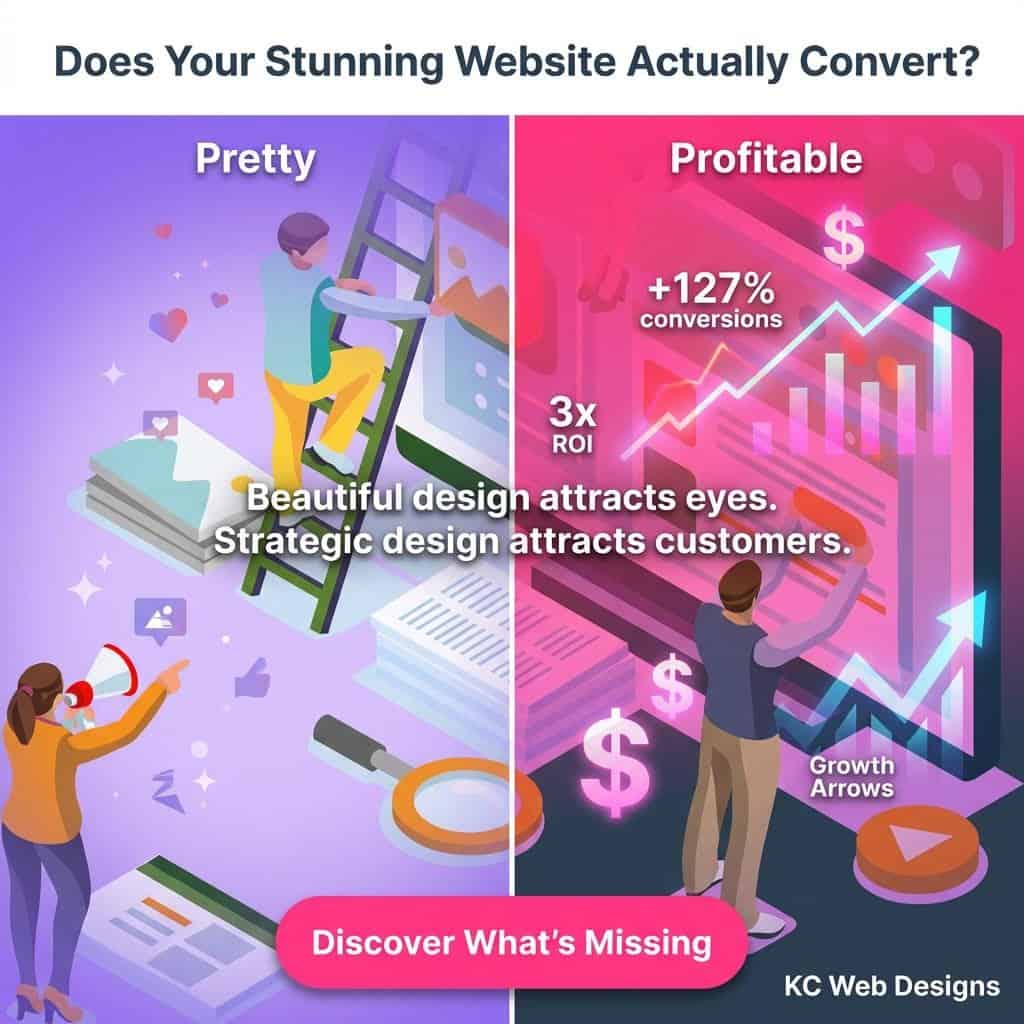
Business owners sometimes think a website redesign is mostly about aesthetics. It is not. Design affects trust. Trust affects conversions. And conversions affect revenue.
Slow Load Times Cost Real Money
One of the biggest reasons websites lose money is speed. Today’s users are impatient, especially on mobile. If your site drags, stutters, or takes too long to display the information people need, you are giving away business before the conversation even begins. Slow websites increase bounce rates, reduce engagement, and hurt your ability to rank well in search.
Think about it from the customer’s perspective. Someone has a plumbing emergency, a broken AC unit, or a legal issue they need help with. They are not looking to admire your homepage. They want fast answers and a clear path to contact you. If your pages lag or your forms do not work smoothly, they will leave.
A faster site creates a better user experience, but it also creates a stronger sales environment. More page views, more calls, more form submissions, and lower abandonment all add up over time. Even small improvements in performance can create meaningful increases in revenue.
Mobile Visitors Expect More Than a Shrunk-Down Desktop Site
A huge percentage of your traffic is likely coming from mobile devices. Yet many business websites still feel cramped, awkward, or incomplete on phones. The buttons are too small. The text is hard to read. Images do not scale properly. Menus are clunky. Contact forms feel like a chore. That kind of friction kills conversions.
A mobile-friendly website is not just a desktop version shrunk for smaller screens. It should feel natural on a phone. That means large tap targets, clean spacing, readable text, clear calls to action, and quick access to phone numbers, maps, and quote forms.
If your mobile experience is weak, your business is almost certainly losing leads from people who were ready to act. In markets where buying intent is high, that can translate into serious lost revenue every month.
Confusing Navigation Hurts Conversions
Many older websites try to say everything at once. They pack too much into the header, bury important services, overload pages with clutter, and make visitors work too hard to find what they need. When users cannot quickly tell what you do, who you help, and how to reach you, they do not stay and investigate. They leave.
Good navigation should make people feel oriented, not overwhelmed. They should be able to understand your services, pricing approach, service area, and next step without guessing. Every extra click, every unclear label, and every visual distraction introduces another chance for that visitor to disappear.
A modern website is built around clarity. That means clean service pathways, strong calls to action, simple navigation, and layouts that guide users through the page in the right order.
Your Website May Be Invisible in Search
An outdated website does not just lose conversions after people land on it. It can also struggle to get found in the first place. Weak page structure, poor metadata, thin content, lack of location relevance, and technical issues all make it harder for your site to compete in Google search results.
If your competitors are investing in better web design, stronger local SEO, and cleaner user experiences, they are building momentum while your site falls behind. That affects rankings, traffic, and ultimately revenue. A business can have a strong reputation offline and still lose online visibility because its website isn’t supporting the brand as it should.
That is why web design and SEO should never be treated as separate ideas. A good website is not just attractive. It is structured to rank, convert, and support long-term growth.
Weak Trust Signals Push Customers Away
When someone lands on your website, they are looking for signs that your business is credible and established. These trust signals can include strong reviews, clear service area information, recent content, professional photography, certifications, awards, case studies, before-and-after work, and a polished overall experience.
If your site lacks those signals, or if the design feels neglected, visitors may hesitate. They might wonder if you are still in business, whether you do quality work, or whether you will be easy to reach after the sale. These doubts are often silent, but they absolutely affect whether people contact you.
Trust is built through consistency. Your website should reflect the quality of your actual business. If you do great work, your site should make that obvious.
Cheap Leads Are Expensive When Your Site Cannot Convert
Some businesses invest in Google Ads, Facebook campaigns, social media, or directory listings without realizing their website is the weak point in the chain. They pay to get traffic, but that traffic lands on a page that is not persuasive, not easy to use, or not designed to convert. The result is a frustrating cycle: ad spend rises, but results remain flat.
A better website improves the return on every marketing channel. It helps SEO perform better. It helps PPC convert better. It helps referrals feel more confident. It helps email and social campaigns produce stronger results. In other words, a strong website multiplies the value of the rest of your marketing.
That is one reason a redesign often pays for itself faster than business owners expect. It is not just about changing the look. It is about fixing the bottlenecks that have been quietly limiting growth.
What a High-Performing Website Should Actually Do
A high-performing website should make it easy for visitors to understand your offer, trust your business, and take action. It should load quickly, look sharp on mobile devices, communicate clearly, and support your search rankings. It should highlight your value, answer common objections, and create confidence.
For local businesses in Kansas City, that also means showing strong location relevance. Your site should clearly communicate who you serve and where you work. It should support your Google Business Profile, reinforce your service pages, and send strong signals to Google about your local authority.
Most importantly, it should work like a sales tool. It should help turn traffic into phone calls, quote requests, bookings, and customers.
Ready to Fix It?
Stop Losing Leads to an Outdated Website
If your current website is slow, outdated, hard to use, or not bringing in the leads it should, KC Web Designs can help. We build custom websites for Kansas City businesses that look better, rank better, and convert better. Whether you need a full redesign or a smarter website strategy, we are here to help you turn your site into a real growth asset.